Showing posts with label predictions. Show all posts

Sunday, March 02, 2014

Let Us Now Celebrate Emotion-Packed Civil Religions

by Gary Berg-Cross

It's another "who will win" weekend in America.  As we approach basketball conference championships, March madness and the Super Bowl fades into the distance, we can gather round our hearths and TVs to
watch the big Oscar shootout. It's a well used cliché to compare our love of sport to religion but it applies at times to other big, competitive award-events contest like the Oscars and of course political contests (stay tuned).  

People have noted some reasons for the Sport-Religion connection. Writing in the Christian Century 30 years ago, Joseph L. Price said, 


"[T]here is a remarkable sense in which the Super Bowl functions as a major religious festival for American culture, for the event signals a convergence of sports, politics, and myth. Like festivals in ancient societies, which made no distinctions regarding the religious, political and sporting character of certain events, the Super Bowl succeeds in reuniting these now disparate dimensions of social life."


Part of this fusion is opportunistic timing.  Important games are played on the weekend when there is time away from work...Especially the Lord's Day for the Superbowl (and I guess Oscar to cross into celebrity). It may be part of this replacement of communal ritual that people seek. Part of it bubbles up in the language of metaphor.  There are "Hail Mary passes". We all understand some of this ritualistic language.  We come together over it.

Some type of transcendent work day devotion is evident both sports and religion and there is a flavor of heartland nationalism to both. Things shut down and the cultural hive-mind gets focused on the Event and its culture. For football it can be the comfort of buffalo wings and grilled alternatives, neighbored by some dips and potables. It's probably not a festal offering, but people may have their own way of helping their "team" win. Different ethnic groups wear food as an outward sign as readily as a Yamaka. And here is atways hyphenated American comfort food like pizza.  And what could make the Oscars more American Gothic than serving pizza during the event and at the event!

Speaking of winning, sure events like Olympics has this nationalist "civil religious" feeling 
of affirmation and energy elevation too. It's a bit like a patriot war with cultural rituals to bind us to the team.  Randall Collins gets at some of the underlying emotional factors that bind people to both sport and religion in Interaction Ritual Chains. A starting premise is that human beings are Emotional Energy seekers. That goes back to our social evolution. Having evolved in small groups we are hungry for emotional group and personal experience.  In this light human activity involving social life and energy tends to be part of what Collins calls an interactive ritual chain. Collins description of ritual chains is pretty simple. They involve:

  1. feelings of belonging (yeah team), 
  2. a sense of co-presence (we are with you), 
  3. a moral feeling (atheists are evil and on the wrong side of issues), 
  4. membership symbols (got my redskins hat), and
  5.  barriers to outsiders (no Muslims need cheer for my team). 


The next time you watch a Redskins game think about these chained feelings. But think also more broadly that history and symbols of the United States have resulted in a sort of pseudo-state religion - a civic religion that includes sports and cultural heroes/celebrities in some type of ritual celebrating space along with our historical figures.

And there is other factors that strengthen the ritual chain bonds in a civic/civil religion and its celebrated events. All such games are spectacles like a 4th of July fireworks celebration and have themes that we see in mythical heroic stories. They go back to favorite players and plays of prior games. Sure we have Washington and Jefferson as historical players. In the sports celebration think Super Bowl highlights or a Duke player scoring the winning basket in the last 3 seconds. BTW, the theme for this year's Oscars?  Heroes...


These group stories include the ideas of sacrifice and toil with potentially glorious payoffs of conquest and victory. Well Bush's wars in the Middle East didn't have those payoffs, but there was certainly an effort to tell the story in heroic terms of sacrifice as part of a civil religion fusion. Our troops were just like our revolutionary war patriots...Only in the Middle East. Yeah for democracy, whether you asked for our version or not.

These fusions of victory are often celebrated in cinema as well as half-time shows. And of course certain participants like quarterbacks take on heroic, demi-god properties.  That was true of Denver's Peyton Manning.  The focus on definable heros can distort are reasoning in a team sport, but this idea of uncertainty and testing of one's betting hunches is part of the attraction to the event. We like the betting aspect of it.  It's almost a moral conviction. And team sport events are pretty
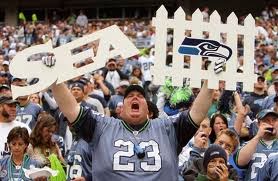
hard to predict accurately as are wars.  Luck and chance has so much to do with games and these are hard to factor in. As an example some of the folks who predicted the results of the national election in 2012 were predicting a toss up in the Super Bowl ("software projects Seattle winning 54.8 percent of the time with an average score of 23.8 to 21.5"). Election prediction champ Nate Silver picked the Seahawks as Super Bowl winners, but the margin was slight.

Perhaps the chance of a first play mistake may have tipped the odds unpredictably. This idea of a gamble is part of the attraction of these events and developing a winning bracketology becomes addictive behavior.  See my earlier blog on the psychological biases in the art of Bracketology.

So sure, it is fun to celebrate a cultural event pick out winners for the Oscar, as if this is based on some obvious merit that every voting body can agree on.  Except the  Academy is quite elite and different from the national population and has Hollywood factors at play ("I just don't like him.") Rating talent for March Madness (next in our Civic ritual chain Celebration?) is probably more grounded, but the bracketology of it remains quite a distance from a science. Luck and chance are there and thus there is an opportunity for people to feel that invisible deterministic connection with events.  We will be part of the game and make our team win through faithful devotion. We will participate in the addictive rituals of a civic-sports religion. The trickle down probably helps keep some Americans in the religious ritual circle. Pass the popcorn. 

Sunday, April 03, 2011

Bracketology, Biases in Inexact Sciences, Energy Futures & Religious Projections


Spring in the DC region can be a mixture of both wonderful & maddening things. The cherry blossoms are wonderful. The budget battle is maddening. We are just ending a type of furious wonder with basketball's March Madness. This year with a baker's 68 we have a small extension of madness into April. Someone once describe the tournament as 4 weeks of Super Bowls!

I enjoy it, but do not participate in one thing that adds to some people's entertainment. This is filling out (and gambling on) brackets to predict the winners as the tournament unfolds. After the Sunday announcing the brackets people get their office copy machines busy on Monday. This locks in commitment for the next few weeks. (But another perspective from 1 survey is an estimate that March Madness distraction, during the 1st week of the tournament games are on Tuesday, Thursday and Friday afternoon, could cost employers as much as $1.8 billion in unproductive wages.)


But this year we hear the groans of people with "busted brackets" as we enjoy the heroics of teams like Butler and VCU. Most people's brackets were burned to toast early as top seeds exited and none of # 1 or 2 seeds made the final four. Saturday's national semifinals featured a No. 3 (UConn) beating # 4 (Kentucky), and # 8 (Butler) beating a ultimate underdog # 11 (Virginia Commonwealth) who had to play in from the new first round of 4.

Each year my son-in-law has my daughter and their kids fill in a bracket and he invites me to participate. This seems reasonable since I spend more time watching the BB season than he does. But I've never tried to fill in a bracket, because there are always teams (like VCU, Arizona, Oakland or Morehead State) that I've not seen in competition. I never feel that I know enough or have good bracketology sense to make even a good wager on likely outcomes. I know that lots of what I would do would involve bias rather than real informed decisions.

But like President Obama I might do as well if not better than supposed bracket experts. By the time of the final 4 the President had none of the finalists, but overall he ranked in the 94.9 percentile of ESPN.com's Tournament Challenge which had 5.9 million brackets were filled out. He was well ahead of supposed experts. Premier college basketball analysts for ESPN and self-proclaimed "king of bracketology" Joe Lunardi thought that all four No. 1 seeds would meet in Atlanta. Dick Vitale with 450 points as at the 21.5 percentile and he had seen most, if not all, of the teams play and had time to analyze then. But Vitale and others seems to have lots of confirmatory bias and favor the big guys or teams they see more of. They talk about the big teams all the time - it plays the odds. Once they get the idea that Pitt is a solid team they have trouble seeing their weaknesses. Note, our local noisy spotlight vampire Tony Kornheiser had an even worse score - 420 points or 12.0 percentile. This performance is up there with Wall St financial experts in 2006-2007.

Part of attraction of brackets is that is just fun to out guess the experts. From a fan's perspective, that's one thing that makes the tournament so special. We may avoid expert biases and get some excitement back underdogs.

But getting the brackets exactly right remains a low probability for anyone. Why is this? With some much time and effort spent, some of it from professionals and experts, one wonders why we don't have better predictions. Bracketology is all very humbling, yet it represents the type of thing that we humans do in understanding the world. Each year more there is more TV coverage of teams including special bracket busting games with match-ups previously seen only in the NCAA tournament. ESPN has numerous shows analyzing teams and ex-coaches and players offering insight. We have the stats on dozens of dimensions - 3 point shooting percentages, rebounding, fouling. We can watch the tape just as if we were a coach preparing for a game. Yet this year we have busted brackets galore.


To me it tells us something about the current, in practice limits of human expertise and knowing. Much of human knowing is guided by simplifications and leveraging assumptions and heuristics. To understand a complex topic we apply some simplifying principles such as "talent wins" or "experience wins".
Sure, but these are qualitative and judgmental. What is a significant talent gap? How do we aggregate across positions? We may be a bit more sophisticated and say. "Quality guard play is more important than interior depth."

Or we may balance things this way:

"Poor foul shooting is not usually an Achilles heel for a top-tier team, because talent can overcome that negative." Such things are in Jared Trexler's "99 Things You Wish You Knew Before...Filling Out Your Hoops Bracket." Jared is National College Basketball Columnist at Sports Network, and I'm not exactly sure how he did this year. His early predictions for the East's 2nd Round had 2 errors - George Mason over Villanova, Clemson over West Virginia. He got 3 of 4 right for the East's Sweet 16 teams: Ohio State, Kentucky, Syracuse, North Carolina but like Obama his regional final was all wrong - Ohio State vs. Syracuse. His West regional final? Duke vs. San Diego State - Nope, all wrong.

Vaguely the whole humbling process suggests a degree of caution in dealing with other complex topics some of which have oppositional frames. The Gulf oil gusher was an us against them saga with technology overtaken by natural risk. Opposition, which we artificially structure in games, reflects choice aspects that we simplify things into. Take energy choices. Do we want nuclear or something else? Well there are many other choices including conservation techniques that may not be considered. This is analogous to not making the NCAA selection cut. You are not part of the conversation.

Once selected as a topic, say for nuclear power analysis focuses on strengths such as benefit and risk . You can view it in a competitive (bracket) fashion and ask if you like the odds of nuclear power being a better choice than say coal. Binary choices are simpler. A front-page story (Nuclear power is safest way to make electricity, according to study) by David Brown in April 3, 2011 Washington Post, illusrates comparative risks of nuclear and coal power. In the data reviewed, nuclear power seems like a far lower of a risk to public health than coal generation. Like our brakets there is lots of data to consider, such as mining deaths vs. deaths from radiation etc.

"Compared with nuclear power, coal is responsible for five times as many worker deaths from accidents, 470 times as many deaths due to air pollution among members of the public, and more than 1,000 times as many cases of serious illness, according to a study of the health effects of electricity generation in Europe."

But there are lots of other factors that whiz by without an easy calculus. There is yet no solution to used fuel storage. There are qualitative factors and projections about the health impacts of climate change. But like expert predictions for BB brackets I've very unconvinced that the analysis reported by the Post is adequate. Citizens do have to choose which energy sources they might support, but the interactions with the environment of each energy approach is more like the team contest and equally hard to predict. Linear projections are untrustworthy tools for dynamic situations and there is always the aspect of human biases to wrestle with. It is well known that our perception of risk is not calculated logically from a neutral unbiased view of the evidence. Rather the psychology of how we process a perception and respond to risk situations mixes emotional reactions to how we interpret evidence. We can be very influenced by salient evidence, such as team rankings, the height of players, even their personality. Once we’ve made up our mind about a risk, a confirming bias takes over and we choose to believe the evidence that agrees with what we already believe. All very humbling and cautionary for how we bracket our decisions about important topics.

A final thought on analysis of religions and secular humanist. Don Wharton discussed some ideas on the possible end of religion - http://secularhumanist.blogspot.com/2011/03/end-of-religion.html Again something like a linear projection is involved and cultural paths of rival ideas is likely to be more dynamic. After all the alumni of some groups is pretty strong, has good guard play and a good recruiting system. Of yes, and they can play rough.

It might be fun to think about secularism in a contest with such religions.


We might have the Big Old West religions Christianity: 2.1 billion with many sub-divisions and New East religions Islam: 1.5 billion (all figures from http://www.adherents.com/Religions_By_Adherents.html

In the New West we have :

Secular/Nonreligious/Agnostic/Atheist: 1.1 billion

In the Old East we have:

Hinduism: 900 million
Chinese traditional religion: 394 million and
Buddhism: 376 million

That still leaves space for the mid-majors such as

Primal-indigenous (that old Pagan category?): 300 million
African Traditional & Diasporic: 100 million
Sikhism: 23 million
Juche: 19 million
Spiritism: 15 million
Judaism: 14 million
Baha'i: 7 million
Jainism: 4.2 million
Shinto: 4 million
Cao Dai: 4 million
Zoroastrianism: 2.6 million
Tenrikyo: 2 million
Neo-Paganism: 1 million
Unitarian-Universalism: 800 thousand
Rastafarianism: 600 thousand
Scientology: 500 thousand

I'm not exactly sure how to bracket these, but you know who I am rooting for overall. The thing is that predicting a winner in the next few rounds is hazardous and I'm not going to rely on a simple linear projection.